
The Welfare State Is the Oldest Con Game in the World
Every great con has the same structure. First, you take something from the mark. Quietly. In a way that feels routine, obligatory, or simply unavoidable. Then you give a fraction of it back — loudly, visibly, with ceremony and gratitude and a politician’s name attached. And you watch the mark thank you for your generosity.
Thomas Sowell described this mechanism with characteristic precision: the welfare state works by taking people’s money away quietly — through taxes, inflation, and debt — and then giving some of it back to them flamboyantly. The same money is counted twice. Once as citizens’ obligation. Again as politicians’ generosity.
The con isn’t that government cuts checks. The con is that it first makes you dependent on those checks — and then on the people who authorize them.
If you want to understand why wealth and liberty must be built together — privately, contractually, and outside systems you do not control — start here.
How the Con Works Financially
The mechanism is not complicated. It has simply been running long enough that most people accept it as the natural order of things.
Step one is extraction. Taxes take a portion of every dollar earned. Inflation — the quiet tax — erodes the purchasing power of every dollar saved. Deficit spending borrows against future earnings that have not yet been made, by people who have not yet been born, to fund promises made to voters today. Each of these mechanisms takes quietly, incrementally, in ways designed to be felt as little as possible in any given moment.
Step two is redistribution — but not full redistribution. A fraction of what was taken returns, attached to conditions, administered by bureaucracies, announced with press conferences and program names and political credit. The net transfer to the recipient is smaller than what was extracted from the citizenry to fund it. The difference funds the apparatus in between.
The political genius of the structure is that the giving is visible and the taking is not. The press conference happens at the check presentation, not at the payroll deduction. The politician’s name goes on the benefit, not on the tax bill. And the citizen — told to be grateful when a fraction of their own earnings is returned to them, minus processing fees and political theater — often is.
This is not an accident of poor design. It is the design.
The Price Tag in Liberty
The financial cost of the welfare state is real but measurable. The liberty cost is harder to see and far more corrosive.
Friedrich Hayek’s warning was specific: when the state guarantees broad, unconditional support, it does not merely redistribute income. It redistributes the locus of decision-making. Every guarantee that replaces your own savings with someone else’s promise moves the center of gravity of your life away from you and toward whoever controls the promise.
You stop building private capital because the state promises to cover the risk. You stop developing the habits of self-reliance because the penalty for not developing them has been softened. You stop accumulating the reserves, the skills, and the community relationships that make a free person genuinely free — because the system has made those things feel less urgent than they are.
Wilhelm Röpke identified the endpoint of this process with clarity: excessive dependence on transfers leads to a decay of autonomy and self-reliance, particularly when it replaces households’ ability to accumulate private property as their own security. A family that owns its home, its savings, its business, and its time is structurally different from a family that depends on a benefit schedule it did not negotiate and cannot modify. The first family is sovereign. The second is managed.
The welfare state, at scale, converts the first kind of family into the second — slowly, incrementally, and with the language of compassion throughout.
A System That Pays You More to Stay Stuck
The structural perversity of most welfare programs is not a flaw that reformers keep trying and failing to fix. It is a predictable consequence of how incentives actually work when government designs them.
Many programs phase out benefits steeply as earned income rises. The result is an implicit marginal tax rate on the working poor that can exceed what high earners pay on their top dollar — because every additional dollar earned simultaneously increases tax liability and reduces benefit eligibility. The rational response to this structure is to stay below the threshold. To not take the extra shift. To not formalize the side income. To optimize your life around the rules of a system that pays you more to stay stuck than to move forward.
Family structure faces the same distortion. In many benefit structures, two-parent households qualify for less than single-parent households with equivalent need. The system does not intend to discourage marriage or stable families. But it prices them at a disadvantage, and behavior follows incentives more reliably than it follows intentions.
A system that pays you more to stay stuck than to move forward is not a safety net. It is a trap with soft padding.
The people caught in it are not stupid. They are responding rationally to the incentive architecture built around them. The tragedy is not their response. It is the architecture.
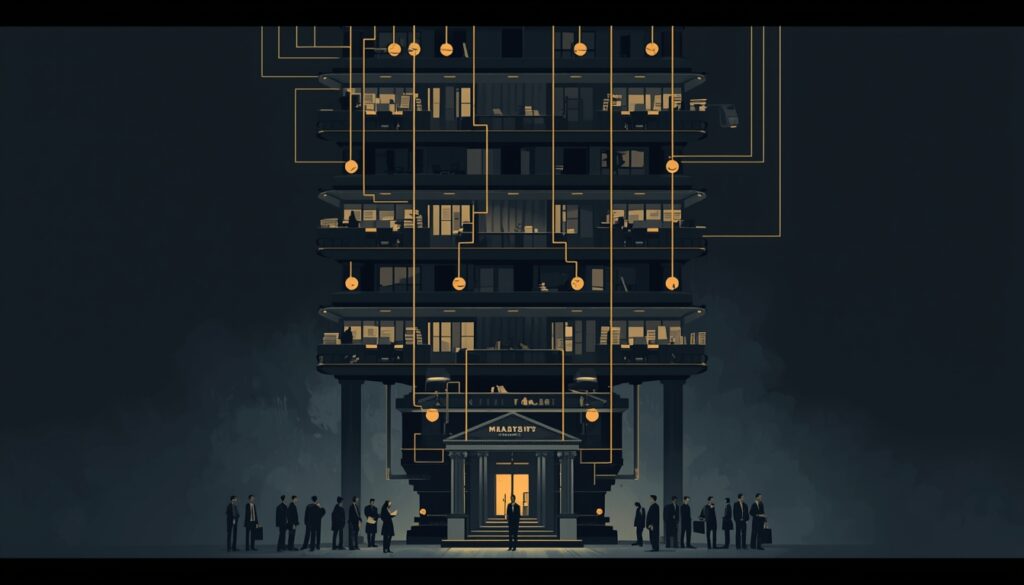
Who Actually Wins: The Welfare Class or the Welfare-State Class?
Sowell’s most pointed observation about the welfare state is also his most uncomfortable: it is not really about the welfare of the masses. It is about the egos of the elites.
This deserves to be taken seriously rather than dismissed as cynicism.
The welfare state, wherever it has grown large and durable, has generated an entire class of people whose professional identity, institutional budget, and economic livelihood depends on the continuation of dependency — not its resolution. Bureaucrats whose departments grow with enrollment. NGOs whose funding scales with caseloads. Academics whose research relevance requires an unresolved social problem. Political careers whose viability depends on delivering benefits to organized constituencies.
None of these people benefit from solving the problem. They benefit from managing it. And so the modern welfare state does not wither away as poverty falls. It professionalizes, unionizes, and then lobbies to keep itself essential.
This is not a conspiracy. It is a predictable consequence of giving any institution a budget tied to a problem’s persistence rather than its solution. The institution will, over time, optimize for its own continuation. The people the institution was created to serve will become, functionally, its justification rather than its purpose.
The beneficiary of the welfare state, examined honestly, is often not the person receiving the check. It is the person administering the program, advocating for its expansion, and voting for the politicians who protect its budget.
The Same Logic That Created “Generation Entitled Wealth”
If this argument sounds familiar, it should.
The welfare state mindset — the belief that the system will always catch you, that someone else will bear the cost of your exposure, that policy will smooth over whatever disruption arrives — is the same mindset that created what we called When Liquidity Masquerades as Skill: The Rise of Entitled Investors.
In financial markets, fifteen years of policy backstops trained investors to believe the Fed would always respond, the market would always recover, and staying in the system was sufficient substitute for building genuine structure. The entitlement was not about laziness. It was about conditioned dependency — a rational response to an environment that kept removing the consequences of structural weakness.
The welfare state operates the same conditioning at a broader scale. It removes consequences. It softens the signal that says: build your own capital, develop your own skills, establish your own agreements. And in doing so, it trains the reflex of dependency in place of the reflex of sovereignty.
You cannot be free in practice if you are structurally dependent on political decisions. Whether those decisions come from a central bank or a benefit administrator is a detail. The dependency is the same.
As we explored in The Gap Between the Marketing and the Math, the financial industry is extraordinarily skilled at making arrangements that serve institutional interests while presenting them as services to individuals. The welfare state is that pattern operating at the level of the state itself.
Free Resource: If this raises a serious question about where your own financial life depends on political promises rather than private agreements, The Fragility Test is a free diagnostic designed to expose exactly that. No pitch. Just clarity.
Why a Welfare Mindset Is Incompatible With Wealth and Liberty
Classical liberal economists from Hayek to Röpke to Buchanan shared a core insight: private capital accumulation is not merely an economic phenomenon. It is the material foundation of personal liberty.
A family that owns productive assets — a business, a property, savings, contractual positions with defined terms — has options. It can say no. It can wait. It can choose its counterparties, its timeline, and its level of exposure. Its freedom is not theoretical. It is structural.
A family whose financial security depends on benefit schedules it did not negotiate, tax policies it did not approve, and political promises it cannot enforce has none of those options. Its freedom is theoretical. Its sovereignty is on loan.
The welfare state, wherever it has grown beyond its legitimate function of providing a limited floor for genuine emergencies, suppresses private capital accumulation in three ways simultaneously: it taxes away capital that could have been saved, it inflates away the purchasing power of capital that was saved, and it trains away the habits and urgency that produce capital accumulation in the first place.
Röpke identified the endpoint: a society in which private property has been gradually supplanted by state-managed transfers is a society that has surrendered the material basis of its freedom. Not through tyranny. Through convenience.
This is the deepest argument for building wealth privately, contractually, and outside systems you do not control. Not because the welfare state is evil. Because dependency — however comfortable — is the opposite of sovereignty. And sovereignty is the precondition for everything else on this platform.
As we explored in Permission vs. Contract: The Wealth Divide No One Talks About, the distinction between cash flow you must ask for and cash flow that arrives by contract regardless of political sentiment is not an abstraction. It is the practical difference between a free person and a managed one.
Free Resource: The Capital Decision Filter is a free framework for evaluating any financial decision against the criteria that genuine sovereignty requires. Download it and apply it to every dollar you currently have parked in a system you do not control.
What a Liberty-Respecting Safety Net Would Look Like
This article is not an argument that no one should ever receive help. That is not the classical liberal position, and it is not ours.
Hayek himself accepted a limited safety net — strictly targeted at preventing genuine destitution, temporary by design, and structured to return people to productive independence as quickly as possible. The legitimate function of a social floor is to catch people in emergencies, not to become a permanent ceiling on their ambition or a substitute for their own capital.
The distinction matters. A safety net designed to help people re-enter productive life is compatible with liberty. A transfer system designed to manage dependency indefinitely — and expanded continuously by the political interests that depend on its growth — is not.
The practical question for a serious wealth-builder is not whether the welfare state should exist. It is whether your own financial life has been designed around its promises — and what happens to that design when those promises are revised, means-tested, delayed, or simply not funded.
Private agreements do not get revised at the next election. Contractual positions do not get means-tested. Capital you own outright does not depend on a budget appropriation. The families who build durable wealth across generations understand this distinction at a structural level — and build accordingly.
If you want to explore what a capital structure looks like that replaces political promises with private contracts, the team at Producers Wealth works with business owners and serious wealth-builders who want their financial security to be sovereign — not on loan from a system they do not control.
Closing Reflection
The oldest con game in the world works because it is dressed in the language of compassion.
No one announces a program to create dependency, grow a bureaucracy, and trade sovereignty for votes. They announce a program to help people, protect families, and ensure no one falls through the cracks.
The intentions are often genuine. The results are structural. And results — not intentions — are what determine whether wealth and liberty survive the encounter.
The mark in every con is the person who judges the arrangement by what they were told rather than by what actually happened. The free person is the one who asks the harder question: after all the taking and all the giving, am I more sovereign than I was before — or less?
If the answer is less, the con worked.
The Critical Thinking Three
- Where in your own financial life are you relying on a political promise — a benefit, a tax treatment, a regulatory protection — instead of a private agreement or owned asset? And what happens to that part of your plan if the promise is revised?
- The welfare state takes quietly through taxes, inflation, and debt — then gives back flamboyantly through programs and press conferences. When you net out what was taken from you against what was returned, are you ahead of where you would have been keeping and deploying that capital privately?
- Are you building toward sovereignty — private capital, contractual cash flow, owned assets, and systems that function regardless of political decisions — or are you building toward a more comfortable form of dependency?
The con works on everyone who never stops to examine it. The people who examine it — and build accordingly — are the ones whose wealth and liberty actually compound together. If you want to start building that kind of structure, start the conversation with Producers Wealth.